
For a small business, the order of AI adoption affects where investment goes. Adding a generation interface often still leaves people preparing its material and transferring results back into the original system. Starting with work whose result can be assessed makes it easier to see what comes next: better inputs, a better method, or a place where the result can be adopted.
Teloa starts with one specific delivery and expands progressively: make the matter traceable, give the investigation an evidential basis, let the owner's adoption produce a definite change, then consider recurring work. Each stage should supply conditions for the next, with investment following results that can actually be used.
The following sequence uses Community's existing SOC, or security operations, alert workflow with synthetic alert data. It is an inspectable product example, not a customer-results case study.
First make the alert a traceable matter
An alert needs at least a source, an occurrence time, a severity label, and material available for investigation. Fixing the source record used for this analysis gives later judgments a definite subject. If the source changes, an earlier report can still explain the material it faced at the time.
Community has a path for synchronizing alert records from a source, viewing a fixed snapshot, selecting an assignee, and entering a working conversation from the record. The record keeps the investigation beside a particular matter: the owner can identify the alert being examined and later find its related task and artifact.
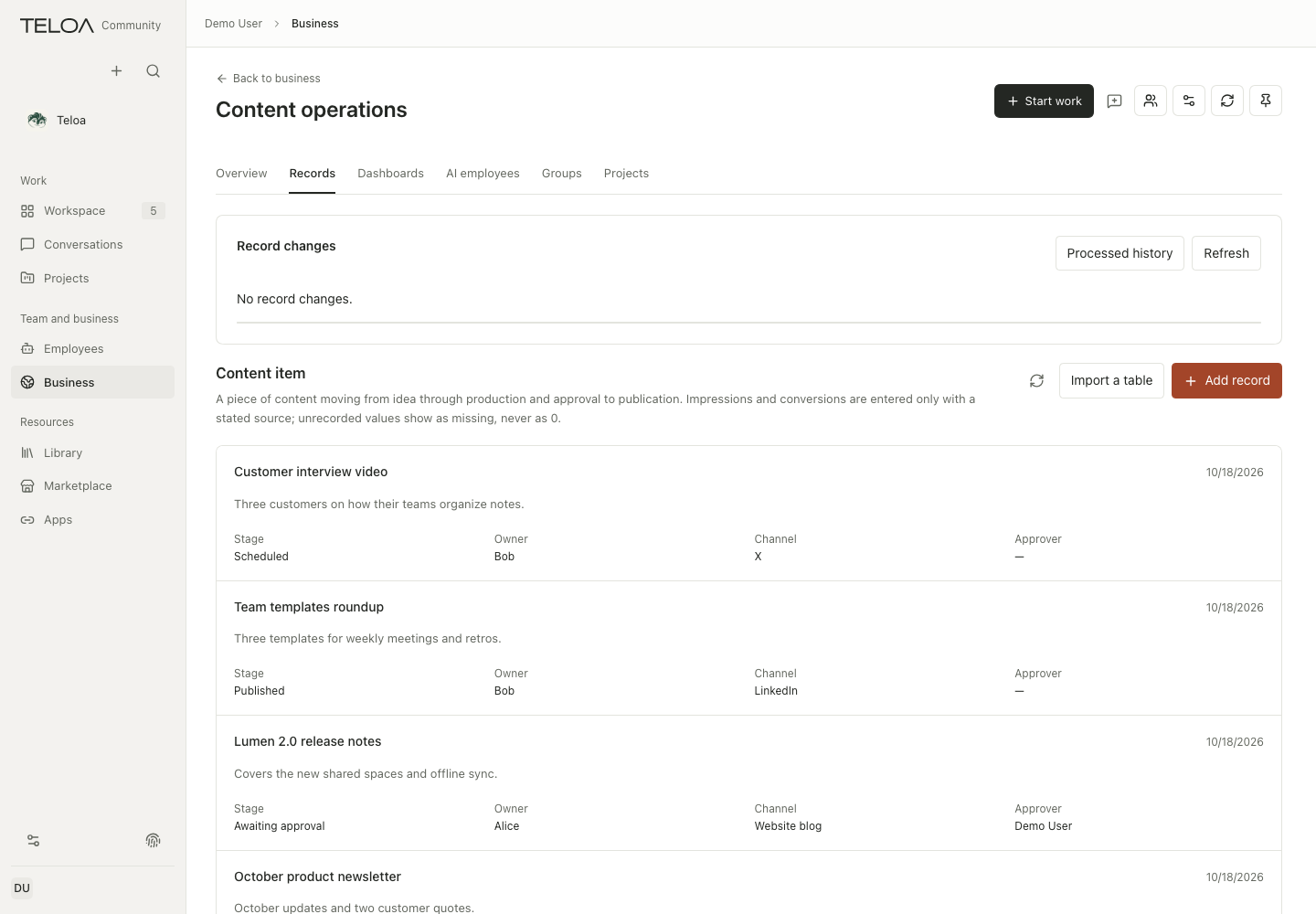
This stage first addresses whether the matter can be found and explained. An unclear source, ambiguous time, or unavailable material calls for repairing those conditions. More analysis employees would reproduce the same gap in more reports. Synchronized alerts keep their source snapshots' read-only status, while locally entered content remains distinct from source facts.
Then make one investigation useful
With a record in place, a scoped investigation can be assigned: explain the main findings from the available material, list evidence gaps, and identify follow-up matters requiring the owner's judgment. Role standards define the depth of investigation; knowledge and skills supply evidence and methods; tools obtain material that may actually be read.
The investigation artifact is linked to the original alert for the owner to inspect from that matter. The record keeps source facts, while the report explains their significance. An inference can then be revised without losing the original material. Missing evidence also has a specific place from which to continue.
The condition for progressing is that the delivery helps the owner handle this alert. If every report needs rewriting, improving material selection, checking procedures, or delivery requirements addresses the problem more directly than adding roles or analysis rounds. Generating a long report produces content; usefulness depends on whether evidence supports its conclusions and gaps are clear.
The owner's adoption moves the investigation into follow-up work
After accepting the investigation report, the owner still decides which findings should enter formal business records and which need further investigation. Accepting an analysis and confirming that an alert has been resolved are different judgments.
Creating or changing a local Teloa business record uses record types already adopted in that business and supported for writing. AI first prepares a persistent change draft showing the target and field differences. When the owner requests adoption, approval in the original conversation precedes execution, and the formal record and adoption result are saved. Closing the view or leaving temporarily still allows a return to the draft for review.
This connects analysis and action around the same matter while leaving room for correction. An incorrect target or misunderstood field can be resolved before adoption. Reading the formal record afterward checks what changed, and further investigation can continue from its original basis.
Adopting a local record does not write back to the external alert source. Closing the alert or taking other action in that source system still requires tools the system actually supports, appropriate authorization, and verification of the result. This stage concerns existing local business actions; a record update is not presented as elimination of the risk.
Repeat the work after the method becomes useful
One investigation makes previously unstated requirements easier to discover: whether the report distinguishes facts from inferences, how missing sources are described, and which findings need follow-up. Practices that repeatedly prove useful in similar investigations can enter role requirements or skills as a starting point for later work.
A timed plan can then arrange recurring work such as summarizing investigation progress and evidence gaps. The plan specifies the goal, schedule, and time zone. Each occurrence leaves its own task, run, and artifact. An available runtime, model, and required connections are prerequisites. Pausing a plan controls later triggers; an occurrence already running is handled through its task.
Automating too early repeats an unrepaired method. Choosing a suitable frequency after several deliveries have been used gives preparation and review a better chance to decrease. A report arriving on time without influencing how anyone handles the matter may also warrant a lower frequency or a pause.
Once a method is useful, resource composition can help other settings reuse roles, skills, and business definitions. Source versions and local changes provide a basis for continued maintenance. Reuse centers on effective methods and structures; each recipient prepares its own data, accounts, and authorizations. This supports work that already holds together without rebuilding the foundation every time.
Let readiness govern the next investment
Following the same alert makes the order of the stages concrete:
| Stage reached | What to check before progressing | What to address if it is not ready |
|---|---|---|
| The matter has a record | Whether sources, times, and required evidence can be traced | Complete inputs and sources before expanding analysis |
| The investigation has an artifact | Whether the owner can use it to make a judgment | Correct material, methods, or delivery standards |
| Local business facts need maintenance | Whether the target, differences, and owner's adoption are explicit | Keep and revise the draft, and continue checking |
| Recurring work is being considered | Whether similar deliveries remain useful and the frequency is worthwhile | Improve the method first or keep starting work manually |
This does not require every business to build a complete system first. Existing records can provide the starting point; an available method can support one initial delivery. Each step should remove a real burden and leave a place to handle the next change. Cost and efficiency can be assessed on that basis: with preparation, review, exceptions, and maintenance taken together, has the work become easier to complete?